Prov 17:22

A merry heart doeth good like a medicine... - Proverbs 17:22
Showing posts with label Gratitude. Show all posts

Friday, October 8, 2021

Strange Place for a Song of Thanks

When my father passed away in 1986, we knew it was coming. Dad had been struggling with the pain of pancreatic cancer far too long. The initial sense of relief, knowing he was finally free from his suffering and home with Jesus, was probably what enabled my sister Shanon and me to sing a duet at his funeral. He and Mom had chosen the song ahead of time, and Sis and I had begun practicing even before Dad left us. We deeply wanted to honor him in this way, and we reached the end of the hymn without tears.

Friends and relatives remarked about the strength we displayed that day. I can’t speak for my sister, but in the weeks that followed, I could not have repeated it for the world. I couldn’t even sing from the congregation on Sunday morning, too deep in grief, anger, and disappointment. I’d sit at my piano and try to sing through the song we’d shared with such confidence, only to choke before the second verse.

One line mocked me every time: “Thanks for what thou dost deny.” 

That’s old English for “thanks for nothing.” Or at least that’s how it felt in my loss. We’d prayed and begged God to heal Dad, but our pleas had been denied. How could I carry on without my daddy? I wanted our children to know him the way I had—healthy and fun. Now another little one was on the way who wouldn’t get to meet him at all.

I don’t believe time heals all wounds. If it did, we’d see a lot fewer wounded people walking around. I think God heals all wounds…over time…when we take them to him. Countless joys and sorrows have passed through my life in the 35 years my father’s been gone. And certainly, these past two years have left us all reeling, haven’t they? Another Thanksgiving season is upon us. Are you finding it hard to feel grateful?

I’ve matured enough to know it’s possible to give thanks, “even when.” Even when I don’t feel like it, even when I’m afraid or angry or disappointed, even when circumstances look grim.

The old hymn Shanon and I shared that day is called simply, Thanks to God, written by August Ludvig Storm (1862-1914) and translated from Swedish by Carl E. Backstrom. Stricken with a serious back disorder, Storm nevertheless penned these words of thanks. I’m so glad the song has been around long enough to be in public domain because that frees me to share the lyrics with you here. I hope they bless you. Happy Thanksgiving!

Thanks to God for my Redeemer,

Thanks for all Thou dost provide.
Thanks for times now but a memory,
Thanks for Jesus by my side!
Thanks for pleasant, balmy springtime,
Thanks for dark and stormy fall.
Thanks for tears by now forgotten,
Thanks for peace within my soul!

Thanks for prayers that Thou hast answered,
Thanks for what Thou dost deny.
Thanks for storms that I have weathered,
Thanks for all Thou dost supply.
Thanks for pain, and thanks for pleasure,
Thanks for comfort in despair.
Thanks for grace that none can measure,
Thanks for love beyond compare!

Thanks for roses by the wayside,
Thanks for thorns their stems contain.
Thanks for home and thanks for fireside,
Thanks for hope, that sweet refrain.
Thanks for joy and thanks for sorrow,
Thanks for tears that bring release.

Thanks for hope in the tomorrow,
Thanks for everlasting peace.


“Rejoice always, pray continually, give thanks in all circumstances; for this is God’s will for you in Christ Jesus. (1 Thessalonians 5:16-18.)

Friday, September 24, 2021

Blind Date

The Sunday of Labor Day weekend, hubby and I took a little day trip. I could not recall the last time I’d been out of town, and we hadn’t done anything even remotely resembling “summer vacation.” The weather was perfect. We grabbed sandwiches at Subway and headed down the highway to Spruce Woods Provincial Park, which we hadn’t visited in over a decade.

Before starting out on what turned into a lovely hike, we stopped to use the washrooms. I’d never given much thought to how, when you pull open the door of a washroom—or any room you’ve never entered—you must “get your bearings” before doing anything else. Before I had a chance to do so, however, the door slammed shut behind me and I found myself in utter darkness. Had the bulbs burned out? Did someone blow a breaker? Why was there no window?

I thought I heard something. “Is anyone else in here?” I called.

No response.

I groped around, finding nothing but air. I managed to turn myself around, and when I finally felt the cool metal of the door, I realized how unobservant I am. Had the handle been on the right or left? Was it the kind you turn? Had I pulled or pushed? I hadn’t taken note of any of those things.


For the life of me, I could not find the handle! Maybe they’d installed one of those doors with a handle only on the outside and from the inside, you merely pushed. But then why didn’t it budge when I pushed? Had I dropped into some weird science fiction story where the door handle disappears and locks you in? I started banging on the door, knowing hubby had opted to wait on the bench outside with our water bottles. I called his name. I haven’t felt such a persistent “get me outta here” feeling since high school Algebra class.

About the same time hubby reached the door (wondering what on earth was wrong with me), I found the handle, turned it, and pulled. I should have pushed. Good grief.

When the door finally opened, sunlight flooded the room and a light switch appeared on the wall beside me—right where one might expect to find a light switch if one was expecting to need a light switch.

When I completed what I’d come for and turned to leave, I noticed a sign on the inside of the door: “To save energy, please turn off lights when you leave.” Wouldn’t a warning on the outside be a good idea? Frustrated and humiliated, I left the light on to spare the next person. While taking my turn on the bench with the water bottles, some other women came along. I suddenly wished I’d obeyed the sign, so I could determine whether I was the only one dopey enough to panic. Not until the next day did it dawn on me that my cell phone was in my backpack and would have provided a perfect flashlight. Duh.

The whole ordeal, though it took mere seconds, helped me realize how much I take my sight for granted. Last year I interviewed Gene McKenzie for a three-part series you may remember. He told me blindness can be exhausting because you must engage your brain in so many extra ways, not only utilizing your other senses but your observation skills and your memory, since your eyes can no longer tell you what’s what. Nothing like a teensy dose of personal experience to help me “see” what he meant.

That series about Gene, Lessons from a Blind Man, is in the running for a Word Guild Award. The winner will be announced tomorrow, September 25th, in a virtual ceremony from Toronto. If it wins, I’ll owe Gene even more gratitude.

For my vision, I owe my Creator gratitude every day of my life.


Friday, March 12, 2021

Saying Grace, Part 2 of 2


In my online query about mealtime prayers, my friend Amanda told me of a time she served her kids a quinoa-based meal which was met with gross faces and complaints. As a joke, she made up this prayer on the fly and she and her kids have been saying it at lunch ever since:

“Thank you, Jesus, for this food,
Help us be kind, and not be rude.
Thanks for hands that help us eat,
Whoever complains can kiss my feet.”

Don’t you love it?

I learned that ethnicity plays a big role in our mealtime prayers. Two friends, both from a Dutch background, said they prayed before and after a meal. Before they ate, they’d say, “Lord bless this food and drink for Jesus’ sake, amen.” After the meal, it was, “Lord thank you for this food and drink for Jesus’ sake, amen.”

One person shared with me a cartoon where a little boy is asking his friend if his family prays before they eat. The other kid answers, “No. We’re Ukrainian. My mom knows how to cook.”

Several friends from a Mennonite background told me that praying aloud was not something they were taught to do, only silent prayers. When at family gatherings at her grandparents’ home, they prayed before and after the meal, also in silence. Dorothy told me, “I asked my mom why and what would the prayer be? She didn’t know. I guess it was one of those things you just did and didn’t ask any questions.”

Speaking of asking questions, I watched a movie recently where a character recited a familiar prayer: “For what we are about to receive, may the Lord make us truly grateful.”

I’ve certainly heard that one before, but now it made me wonder something. The prayer implies that God has to make us grateful, as though gratitude is not a response we can choose for ourselves. If that were true, why would scripture instruct us, “In everything, give thanks?” (I Thessalonians 5:18) Not all our prayers carry the best theology.

When my children were preschoolers, our church ran a program called “LIFT” where women came together for a morning of activities, study, and prayer while their children attended their own program. My kids and I loved participating, but they came home singing a new prayer that really raised my eyebrows at first. Have you heard it?

“Oh, the Lord is good to me. And so I thank the Lord; For giving me the things I need, the sun, and the rain, and the apple seed. The Lord is good to me.” The catchy tune made me smile, and I found no fault with the words. But where I’d been taught to pray in Jesus’ name, this prayer ended with, “Johnny Appleseed, Amen.”

I’m sure I gasped out loud the first time I heard the closer. What kind of heresy was this? I steered my children away from the “Johnny Appleseed” ending, though it was their favorite part. I was concerned the phrase would somehow offend God.

I wish I’d known then that God is not so easily offended. That he is far more concerned with the genuine condition of our hearts than by the precision of our words. That he basks in the songs of children. That he inhabits our praises, our gratitude, and our joy.

I think the most meaningful prayer sent my way came from Jocelyn who said it was often sung but sometimes spoken:

“For food in a world where many walk in hunger,
For faith in a world where many walk in fear,
For friends in a world where many walk alone,
We give you humble thanks, oh Lord.” 

To that I say, Amen!

What is your favorite meal-time prayer?


Friday, September 11, 2020

Unprecedented Conveniences

If I hear the phrase, “In these unprecedented times” once more, I might pitch a fit.

As an author of historical fiction, I spend large portions of my day immersed in the years before my birth. I try my best to get the details correct, researching as I go. When I walk away from my desk and go about other tasks, I’m often thinking about how my characters would complete the same tasks.


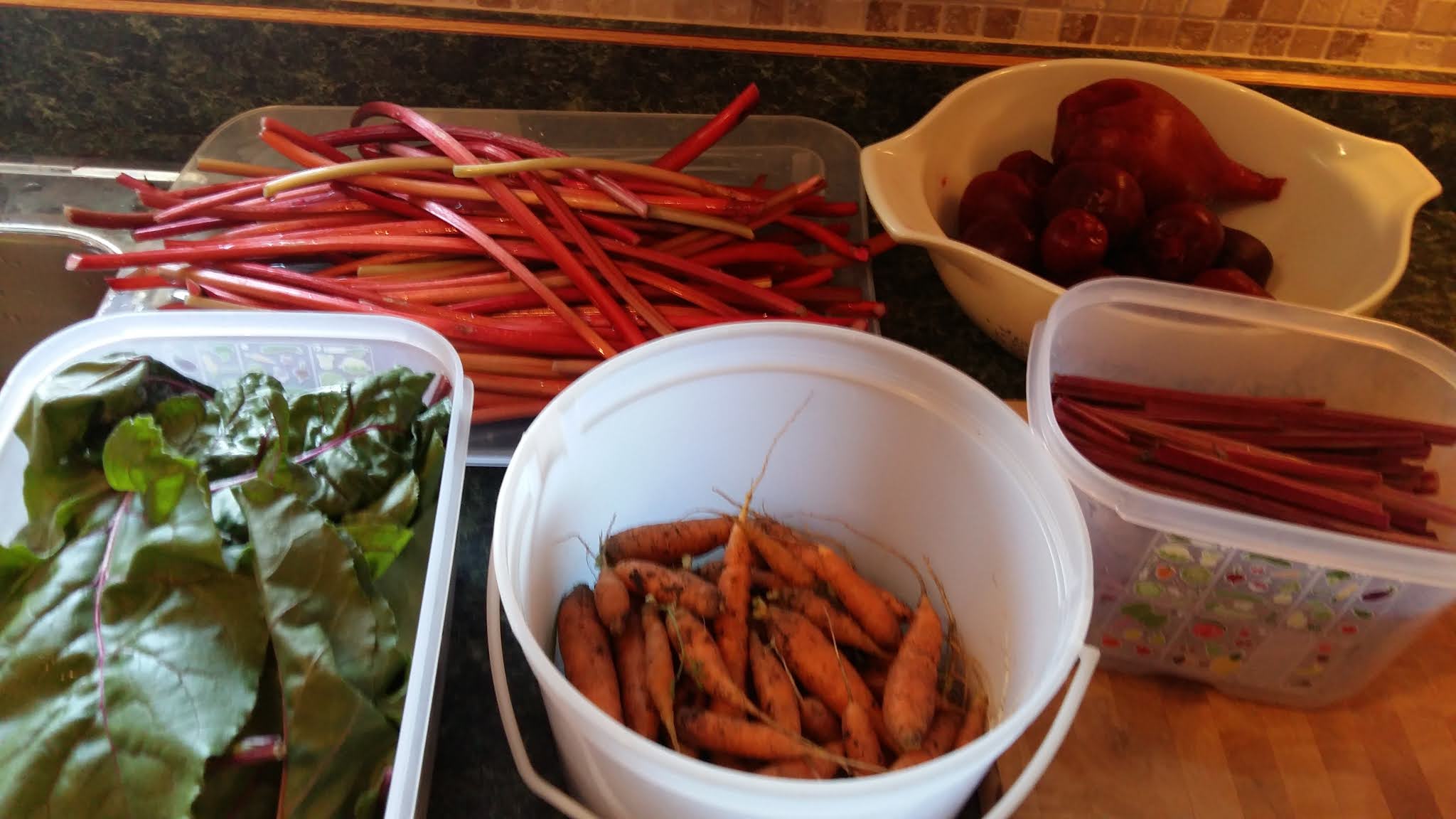
One day I hauled beets, carrots, and rhubarb from my garden into the house. By noon, a giant pot of borscht simmered on the stove, a bowl of beets was set aside for supper, with a couple of packages frozen for another day. Greens and stems were washed and refrigerated for use in salads and smoothies. The rhubarb was cooked, the carrots scrubbed and sitting in water in the fridge ready for snacking. I enjoyed my morning’s work but nearly collapsed after the kitchen was all clean again. 
 
I doubt I’d have survived if I’d had to do it the way my grandmother completed those same jobs 80 years ago. First, pumping water from a well and hauling it inside to heat on a wood-burning stove, for which I also had to split and carry the wood. Figuring out how to keep the fire at an even temperature. Canning, because freezing was not an option. Afterwards, heating more water to wash everything by hand and lugging the dirty water outside. Scrubbing the nasty beet stains out of all the dishrags and towels before hanging them on the line. All on a hot summer day with no air conditioning and no shower. 
 
It’s enough to raise my level of respect and admiration for previous generations. How could all that work not build character? I can’t help thinking our ancestors might roll their eyes if they heard us complaining about our difficult lives in these unprecedented times.
 
Will future historians identify a link between our entitlement and how we emerge on the other side of this pandemic? Will they remember us as perseverant, appreciative? Or will we go down in history as the most spoiled, the most consumer-driven generation ever? As people who didn’t possess the character required to overcome adversity? As folks outraged that they should be so inconvenienced by a pandemic?

Global pandemics are not new. The losses so far from Covid-19 are nowhere near unprecedented. Yes, it’s horrible. It’s sad. It’s frightening, it’s stressful, and it’s darn inconvenient. But it is not unprecedented.

That’s why a look at history can restore hope. We enjoy countless advantages over those who experienced pandemics in the past. If anything is unprecedented, it’s our lightning-speed communication, our modern testing methods, and our state-of-the-art medical systems. Don’t believe me? Then answer this: If you must go through a pandemic, would you rather do so in 1420, 1920, or 2020?

Experts tells us most pandemics last between 18 months and two years. Perhaps the better question is not, “how will we survive these times?” but “are we made of the right stuff?” May the precedent set by our forebears empower us, deepen our character, and generate lasting hope in our hearts.

“We know that suffering produces perseverance; perseverance, character; and character, hope.” (Romans 5:4)